

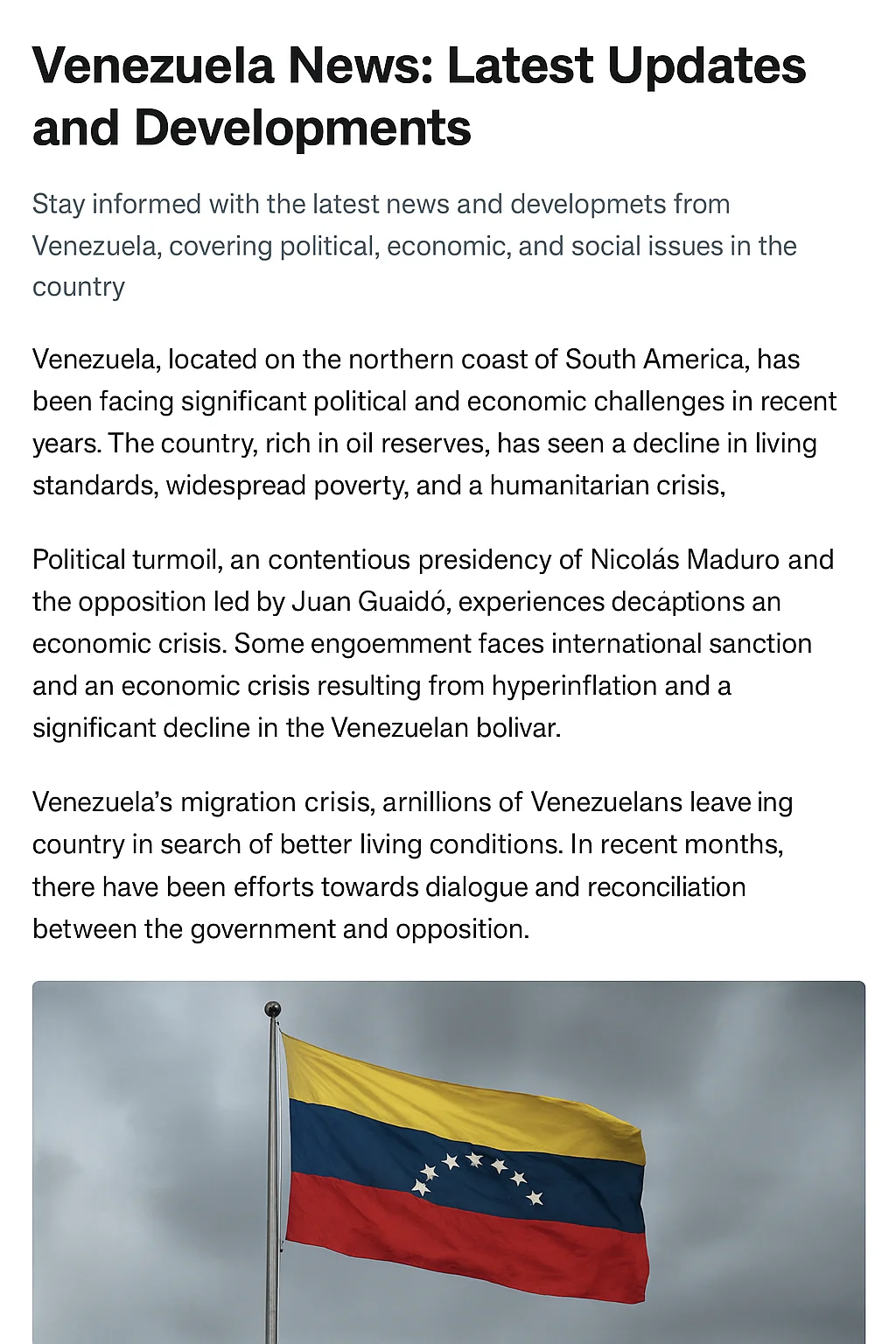
Venezuela News 2026: Latest Updates and In-Depth Analysis
Venezuela remains one of the most talked-about countries in global news due to its political tensions, economic instability, and humanitarian challenges. As the country enters 2026, international media, analysts, and organizations continue to closely monitor developments across Caracas, Maracaibo, Valencia, Barquisimeto, and other major regions.
This comprehensive article explores the latest Venezuela news, covering politics, the economy, the oil sector, migration, social conditions, and international relations — offering readers an updated and insightful look at what is shaping the country today.
1. Venezuela in 2026: A Country at a Crossroads
Venezuela, once one of the wealthiest nations in Latin America due to its massive oil reserves, continues to face significant internal and external challenges. With political polarization, hyperinflation, international sanctions, and a massive migration crisis, the nation is trying to stabilize while navigating global expectations and domestic pressures.
In 2026, news coming out of Venezuela highlights both ongoing struggles and emerging opportunities for recovery, dialogue, and reform.
2. Political Climate: Government vs. Opposition
The political situation remains one of the major focuses of News Venezuela updates.
President Nicolás Maduro and the Venezuelan government maintain control, but opposition parties continue to seek space for democratic reforms, fair elections, and more inclusive governance.
Key Political Developments in 2026:
- Renewed dialogue efforts between the government and opposition groups.
- Ongoing concerns over political freedoms, election transparency, and judicial independence.
- Increased international involvement from UN, OAS, EU, and Latin American neighbors pushing for democratic guarantees.
- Local protests in multiple regions calling for improved social services and lower costs of living.
The political situation remains a major influence on the country’s economy, security, and global perception.
3. Venezuela’s Economy: Inflation, Oil & Daily Challenges
Venezuela’s economy has struggled for years due to mismanagement, declining oil production, currency collapse, and sanctions. However, in 2026, there are some noteworthy trends.
Inflation and Cost of Living
The country still faces high inflation, though not at hyperinflation levels seen in previous years. The bolívar continues to lose value against the US dollar despite partial stabilization efforts.
Oil Industry and PDVSA
The state-run oil company PDVSA remains the backbone of Venezuela’s revenue. Recent developments include:
- Attempts to modernize equipment and refineries.
- Increased collaboration with international companies from China, India, and some Middle Eastern states.
- Slowly rising production due to limited sanctions relief.
Local Economy and Employment
Consumers face challenges such as:
- High prices for groceries and imported goods
- Low wages compared to cost of living
- Limited job opportunities outside major cities
Semantic entities:
Venezuelan Bolivar, PDVSA, Oil Production, OPEC, U.S. Sanctions, Inflation Rate, Dollarization, Central Bank of Venezuela.
4. Social Conditions & Humanitarian Concerns
Venezuela’s social landscape continues to dominate headlines due to ongoing humanitarian issues.
Daily life for many Venezuelans includes struggles with:
- Food insecurity
- Power outages
- Water shortages
- Limited access to medicine and healthcare
- Public transportation breakdowns
Groups such as the World Food Programme, Red Cross, and UNICEF remain active in multiple regions, supporting nutrition programs, healthcare access, and crisis-response operations.
5. Migration Crisis: Millions Still Abroad
The Venezuelan migration crisis is one of the largest displacement events in modern history, with more than 7 million Venezuelans moving to countries such as Colombia, Brazil, Peru, Ecuador, Chile, Spain, and the United States.
2026 Migration Trends:
- Continued movement seeking employment and stability
- Increased return migration due to small economic improvements
- Family separations and remittances supporting relatives back home
The crisis significantly affects labor markets, immigration policies, and social systems across Latin America.
6. International Relations & Global Response
Venezuela’s geopolitical importance extends far beyond its borders because of its:
- Oil reserves
- Strategic location
- Role in Latin American alliances
Key International Relationships in 2026:
- Closer ties with China, Russia, Iran, and Turkey
- Ongoing diplomatic tension with the United States
- Mixed responses from the European Union, with some nations advocating for sanctions and others for negotiation
7. Daily Life & Culture: Resilience Amid Crisis
Despite hardships, Venezuelans remain deeply connected to their culture, identity, and traditions.
The country’s music, food, festivals, and community life continue to thrive in many areas. Markets, street vendors, and local businesses contribute to a vibrant, resilient culture that has survived even the harshest economic conditions.
8. Future Outlook: What’s Next for Venezuela?
As 2026 progresses, Venezuela faces a long but hopeful road toward recovery. Improvements in dialogue, partial stabilization of the economy, and renewed foreign investment are small signs of progress.
Future Predictions:
- Potential easing of sanctions if political agreements continue
- Gradual improvement in oil production and exports
- Slow but steady economic recovery in major cities
- Ongoing pressure for democratic reforms and transparent elections
- Continued importance of humanitarian aid
While challenges remain significant, the resilience and determination of the Venezuelan people inspire hope for a more stable and prosperous future.
Conclusion
Venezuela remains one of the most closely watched nations in global news due to its powerful combination of political tension, economic instability, and humanitarian challenges. Yet, beneath the headlines lies a country full of potential, natural wealth, culture, and millions of citizens eager for change.
Staying informed with Venezuela News in 2026 is essential for understanding the shifting dynamics of Latin America, global energy markets, and international diplomacy.